Today is leap year day. I tried to weave the occasion into this short blog post but failed. Happy leap year day! I guess I have to wait until 2028 to write a blog post that has something to do with the day. The rest of the post has nothing to do with leap years.
Recently, I have been investigating the theory of the “node labeling” problem. The goal is to fully label the graph: use labels of some nodes in the graph to propagate labels to all the other nodes in the graph. Large network graphs display statistical characteristics that can be analyzed to gain deeper insights into complex systems. A key challenge within semi-supervised node classification involves allocating labels to all unlabeled nodes within a network graph.
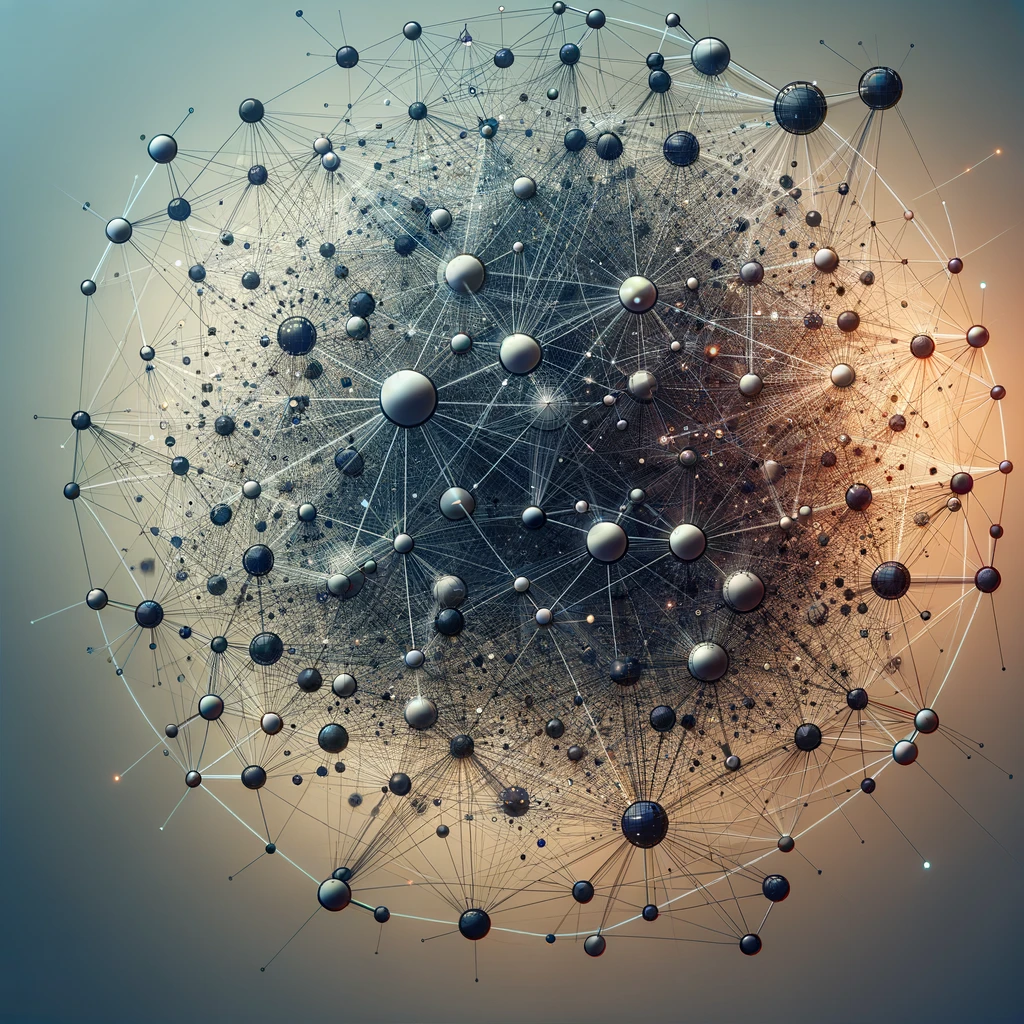
Node Labeling Problem
The problem concerns classifying unlabeled nodes in a graph using information about the already-labeled nodes. Here are some applications:
- For recommendation systems based on interests of other individuals in the network
- Advertising systems
- Sociological studies of communities (e.g., inferring community affinity) and studying how ideas/memes spread
One could ask: Why not ask users to self-label? There are several issues with requiring self-labels: users may fail to update their labels; out of concerns for privacy, users may distort their information; users may put misleading information. As a side note, sociologists have historically used financial incentives to motivate individuals to provide accurate labels [1].
Now to actually solve the problem, there seems to be two broad types techniques used:
- Classification: Use graph information as features into a traditional classification system.
- Random Walks: Propagate existing labels via random walks.
Classification Methods
Essentially, these iterative methods use local neighborhood information to generate features that can be used to learn local classifiers. A problem with this approach, however, is that basing the labels
solely on labels of other nodes can lead to isolated components being unlabeled.
Random Walks
The method starts from a set of labeled nodes and performs a random walk on the graph. For this method to provide a complete labeling, every unlabeled node in the graph is assumed to be reachable (in finite steps) from some labeled node. This is called label connectivity.
[1] Wayne W. Zachary. An information flow model for conflict and fission in small groups. Journal of Anthropological Research, 33(4):452–473, 1977
 Why (and How) Things Work